
Tracheostomy is a lifesaving medical procedure widely used in hospitals and home-care settings across Pakistan. Patients who require long-term airway support or mechanical ventilation often depend on tracheostomy tubes for safe breathing. However, many caregivers and patients are unaware that there are different types of tracheostomy tubes, especially fenestrated and non-fenestrated tracheostomy tubes.
Understanding the difference between fenestrated tracheostomy and standard (non-fenestrated) tracheostomy in Pakistan can help patients receive better care, improved comfort, and a higher quality of life.
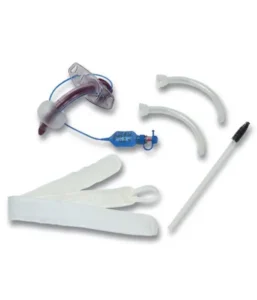
What Is a Tracheostomy?
A tracheostomy is a surgical procedure in which an opening is created in the neck to insert a tube directly into the windpipe (trachea). This allows air to bypass the mouth and nose, helping patients breathe more easily.
Tracheostomy is commonly recommended for:
- Long-term ventilator support
- Severe airway obstruction
- Neurological conditions
- Head or neck injuries
- Chronic respiratory diseases
In Pakistan, tracheostomy is performed in major hospitals and supported by home medical equipment providers.
What Is a Fenestrated Tracheostomy Tube?
A fenestrated tracheostomy tube has one or more small holes (fenestrations) on the upper curve of the tube. These holes allow air to pass upward through the vocal cords when the inner cannula is removed or when airflow is redirected.
Key Benefits of Fenestrated Tracheostomy
- Allows patients to speak more easily
- Improves airflow through vocal cords
- Helpful during speech therapy
- Enhances patient confidence and communication
Fenestrated tracheostomy tubes are often used during recovery or weaning from ventilators.
What Is a Non-Fenestrated Tracheostomy Tube?
A non-fenestrated tracheostomy tube does not have holes and directs all airflow directly through the tube. This type is more commonly used in critical care settings.
Key Benefits of Non-Fenestrated Tracheostomy
- Safer for long-term ventilation
- Reduced risk of granulation tissue
- Better for high-pressure ventilation
- Commonly used in ICU patients
In most Pakistani hospitals, non-fenestrated tracheostomy tubes are used initially after surgery.
Fenestrated vs Non-Fenestrated Tracheostomy – Key Differences
| Feature | Fenestrated Tracheostomy | Non-Fenestrated Tracheostomy |
|---|---|---|
| Speaking ability | Yes | No |
| Airflow through vocal cords | Allowed | Not allowed |
| Ventilation safety | Moderate | High |
| Risk of tissue damage | Slightly higher | Lower |
| Use case | Recovery & speech | ICU & long-term ventilation |
Understanding this difference helps doctors choose the right tracheostomy tube for each patient.
Which Tracheostomy Tube Is Better for Patients in Pakistan?
The choice depends on:
- Patient’s medical condition
- Ventilator dependency
- Ability to swallow and speak
- Long-term vs short-term care needs
Doctors may start with a non-fenestrated tracheostomy tube and later shift to a fenestrated tracheostomy tube when speech and rehabilitation become priorities.
Tracheostomy Care and Management in Pakistan
Proper tracheostomy care is essential to prevent infections and complications.
Basic Care Tips
- Regular cleaning of the tube
- Proper suctioning technique
- Humidified air usage
- Monitoring for infection or blockage
- Timely tube replacement
Many medical suppliers in Pakistan provide tracheostomy tubes, suction machines, and respiratory care equipment for home use.
Availability of Tracheostomy Tubes in Pakistan
Both fenestrated and non-fenestrated tracheostomy tubes are available in Pakistan through:
- Hospitals and ICUs
- Medical equipment suppliers
- Home healthcare providers
Prices vary depending on:
- Brand and material
- Tube size
- Disposable or reusable design
FAQs
1. What is the main difference between fenestrated and non-fenestrated tracheostomy?
Fenestrated tubes allow speech, while non-fenestrated tubes are safer for ventilation.
2. Is fenestrated tracheostomy safe for all patients?
No, it is recommended only for stable patients under medical supervision.
3. Can tracheostomy patients speak normally?
With fenestrated tubes or speaking valves, some patients can speak.
4. Are tracheostomy tubes available for home care in Pakistan?
Yes, many suppliers offer home-use tracheostomy equipment.
5. Who decides which tracheostomy tube to use?
The treating doctor or respiratory specialist decides based on patient condition.
Conclusion
Understanding fenestrated tracheostomy and tracheostomy in Pakistan is essential for patients, caregivers, and healthcare providers. While non-fenestrated tracheostomy tubes are crucial for safe ventilation, fenestrated tubes play an important role in recovery, communication, and quality of life.
Choosing the right tracheostomy tube under medical guidance ensures better airway management, patient comfort, and long-term health outcomes.